214% Revenue Growth and 37% Lower Cost Per Purchase for an Austin Skincare Brand
- Blended ROAS
- 3.8x
- from 1.7x
- Monthly Revenue
- $223k
- from $71k
- Repeat Purchase Rate
- 31%
- from 15%
- Cost Per Purchase
- -37%
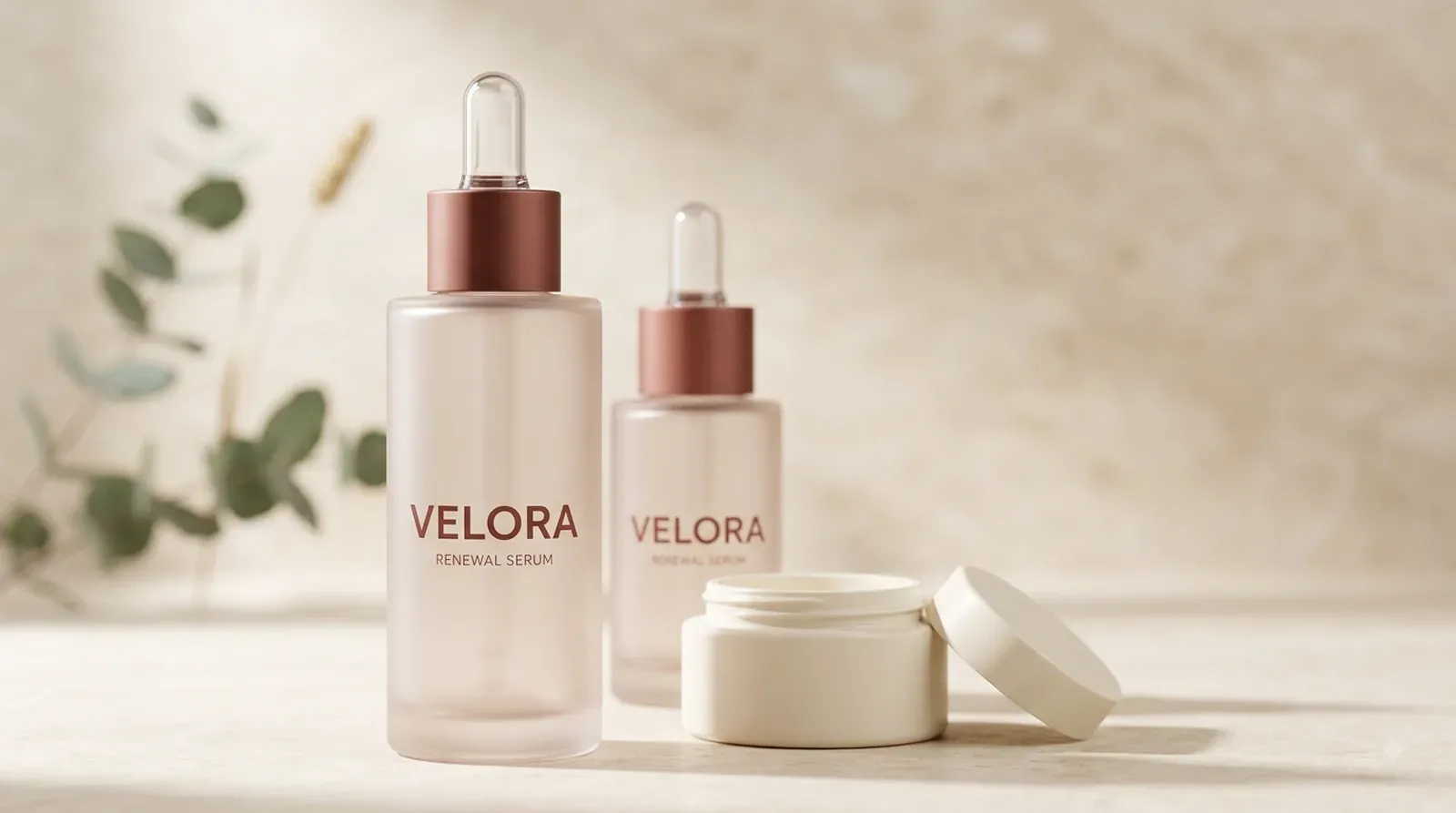
Overview
Velora Beauty is a direct-to-consumer clean skincare and color cosmetics brand based in Austin, Texas, selling exclusively through Shopify at a $78 average order value. We started working with Velora in June 2024, when monthly revenue sat around $71k on $65k of ad spend, with blended ROAS near 1.7x. Today, monthly revenue has grown to $223k — a 214% increase — and blended ROAS sits at 3.8x.
A merchandising problem, not a traffic problem
This wasn’t a traffic problem. Going into June 2024, Velora had real product and real demand, but too much of the account’s weight was riding on one or two hero products, with nothing built underneath them to turn a first purchase into a routine. Creative fatigue on Meta compounded it — without seasonal or routine-based messaging to rotate through, the same handful of ads kept running until they wore out.
We treated this as a merchandising and retention problem first, not a demand problem, and built the account around turning a single-product purchase into an actual routine.
Four shifts, working toward the same routine
1. Meta — testing-heavy structure
We moved Meta to a testing-heavy structure with weekly creative refreshes, because creative fatigue was the single biggest drag on the account at intake. That tighter cadence — a real step up from what the account had been running — gave us room to test real-skin-result creative and simple multi-product routines instead of leaning on the same one or two hero-product ads.
2. Google Shopping — hero and bundle products
We optimized Google Shopping around hero and bundle products specifically, rather than spreading spend evenly across the catalog. Bundling gave us a natural way to introduce the idea of a routine at the point of purchase, not just after.
3. Product pages rebuilt around proof, not more lifestyle shots
We redesigned product pages with clear ingredient call-outs and before/after-style imagery, deliberately keeping the register lifestyle rather than clinical, to match the brand’s tone — showing what a product actually did without the page feeling like a dermatology chart.
4. Klaviyo — routine and win-back flows
We built a post-purchase routine series designed to move a customer from one hero product to a full routine, plus a win-back flow for lapsed customers. We treat this as retention infrastructure, not a discount channel — the emails walk someone through how to use what they bought and what complements it, rather than just offering a percentage off to come back.
What didn't work
UGC that looked authentic but converted like an ad
Not everything we tried worked. Here’s what we cut, and why.
Overly polished influencer-style UGC
We tested an influencer-style UGC angle, but it read as too polished to pass for authentic. UGC works because it feels unscripted — “influencer-style but polished” landed in an uncanny middle that came across as neither authentic nor premium. It underperformed, so we paused it.
Broad “beauty enthusiasts” interest targeting
We ran a broad beauty-enthusiasts interest audience on the assumption that general category engagement would translate into buyers. It failed to convert efficiently, so we replaced it with tighter lookalikes built from actual purchasers.
- Blended ROAS
- 3.8x
- from 1.7x
- Monthly Revenue
- $223k
- from $71k
Revenue and ROAS, June 2024 to present
The account held roughly flat through the summer of 2024, then lifted clearly after the September 2024 creative and product-page overhaul — the lift lines up directly with when routine-based creative and the ingredient-forward product pages both went live together. Before that, the account was still carrying its old hero-product-only weight.
Revenue grew 214%, from $71k to $223k a month. Cost per purchase is down 37% over the same window. We don’t think all of this came from the media program alone — clean beauty and skincare demand has grown broadly over this period, and “routine-building” messaging has its own natural seasonality, like a January reset or gifting seasons, that isn’t purely attributable to what we changed. We don’t have data to attribute an exact percentage to either factor, so we’re not going to invent one.
From a cold ad to a second, complementary purchase
The path a Velora customer takes today is built to extend past the first bottle.
The 31% number that matters most in skincare
Four channels, rebuilt around routine
Four workstreams ran across the engagement, summarized here and detailed in the table below.
| Channel / Workstream | What We Did | Why It Mattered |
|---|---|---|
| Meta Ads | Testing-heavy structure with weekly creative refreshes. | Directly addressed the creative fatigue identified at intake, the single biggest drag on the account. |
| Google Shopping | Hero and bundle product optimization instead of even catalog-wide spend. | Introduced the routine concept at the point of purchase and concentrated budget on what actually converted. |
| CRO | Product page redesign: ingredient call-outs, before/after lifestyle imagery. | Showed what a product did without tipping into a clinical register that didn't match the brand. |
| Lifecycle (Klaviyo) | Post-purchase routine series plus a win-back flow. | Turned retention into standing infrastructure instead of a discount channel switched on occasionally. |
Velora against a typical clean-beauty DTC account
| Metric | Typical Clean-Beauty / Skincare DTC Account | Velora Beauty (Actual) |
|---|---|---|
| Blended ROAS | Beauty and skincare typically runs 3x–6x blended, per based.marketing's 2026 ecommerce ROAS benchmark report. 1 | 3.8x, up from 1.7x |
| Repeat Purchase Rate | Beauty and skincare typically lands 30%–45% on a 12-month window, per Prooflytics' repeat purchase rate benchmark report. 2 | 31%, up from 15% |
The repeat rate that actually matters for skincare
Blended ROAS moved from 1.7x to 3.8x. Monthly revenue grew 214%, from $71k to $223k. Repeat purchase rate nearly doubled, from 15% to 31%. Cost per purchase is down 37%. None of this happened in a straight line, and we don’t think it happened from the media program in isolation.
Customer mix
Before
15%
Repeat
After
31%
Repeat
Repeat moved from 15% to 31% of the total, with New making up the remainder — a gain of 16 points.
We were a single-product brand pretending to be a routine brand, and our numbers reflected that.
Your budget deserves better.
More results
Other engagements.

3.9x
Blended ROAS
from 1.6x
3.9x ROAS and $265k in Monthly Revenue for a Los Angeles Apparel Brand
We took Vespera Apparel from a single undifferentiated Meta campaign and a 14% repeat purchase rate to a segmented account and real retention infrastructure — nearly tripling blended ROAS along the way.

6.4x
Blended ROAS
from 1.8x
6.4x ROAS and $4.8M in Revenue for Luminara Jewelry
We took Luminara from a fatigued, single-tier Meta account and an unoptimized Google feed to a trust-and-consideration funnel built for a $480 purchase — and generated $4.8M in revenue along the way.

3.6x
Blended ROAS
from 1.9x
3.6x ROAS and CAD $325k Monthly Revenue for Havenwood Home
We took Havenwood from product pages that couldn't answer a considered buyer's real questions to a full storytelling system for solid-wood furniture — and more than doubled repeat purchase rate along the way.